The other Francigena. The daily life of the medieval pilgrimage
 of Stopani Renato
and Letters. 2010-94 pp. The pilgrim
walking "living space to transcend it, but that did not mean the disappearance of the reality around him, and with it the problems of everyday life, even the most trivial, which continued to exist and that they should still be addressed. The documentary sources, especially from the late Middle Ages, we offer a range of information for what concerns the world needs, more and more drawn from the memoirs and diaries, with the hardships, hazards, adaptation to different and unknown. It is the materiality of the pilgrimage, made to toil and sweat, thirst and hunger, bad weather and sweltering heat, according to a scenario that remains unchanged over the centuries. The present book addresses these issues, drawing exclusively reported by sources, which gives substance and vitality to the discourse and allows us to reconstruct the social and economic environment within lquale pilgrims moved in carrying out their religious experience.
The Medieval cathedrals
 Blondel and Jean-François
Arkeios. 2010, 444 p., ill
This text describes in detail the Golden Age (XI-XII century) of the French cathedrals, examining the process of construction, financing, symbolism, technology, and the pedagogical role social function that they did of these brazen monuments erected to the glory of the Lord as many mirrors in the medieval world. Jean-Francois Blondel makes the reader see some of the greatest masterpieces of Gothic architecture, describing in a precise and detailed, the cathedrals of Paris, Chartres, Senlis, Sens, Laon, Soissons, Reims, Strasbourg, Troyes, Metz, Rouen , Bayeux, Coutances, Lisieux, Tréguier, Quimper, Bourges, Clermont-Ferrand, Le Puy, Périgueux, Angoulême, Rodez, Albi, Narbonne, Lyon, Mende, Avignon and Marseille. The work is also accompanied by appendices on important dates of construction of all buildings, their size, but also from texts written by the great architect Villard de Honnecourt, as well as archival documents on construction costs. A glossary of technical terms used in historical and complete the book.
Middle Ages on the nose. Glasses, buttons and other inventions of medieval
 Frugoni
Chiara Laterza and 2010 - V-183 p., ill. An unexpected
Middle Ages with a thousand inventions glasses and buttons, as well as fork and spaghetti, musical notes and gunpowder. A fascinating tale, a documented history of smiling irony and colorful pictures. The narrator is Frugoni Chiara, a leading Italian medievalists, which creates an ideal dictionary of the Middle Ages with lightness and humor in response to implicit or explicit lots of interesting items from our experiences of everyday objects, customs and ways of speaking.
Life board in the Middle Ages. From Vikings to the galleys of
 Merrien Jean
Murcia (Gruppo Editoriale), 2008-230 pp.
Through the narration of the origin and type of vessels, from Viking ships sailing the Atlantic, the rowing galleys, the author reconstructs the life on board in all its aspects: from food to transport goods, civil and military organization, providing valuable information for the reinterpretation of key pages of medieval history.
Bubbles and papal decrees of the Middle Ages

AINU and Gennaro Farina, 2010 - 120 pp. A text
a bit 'difficult but it can help to understand the mentality of the Middle Ages.
The Church, the secret of obedience
 Chiffoleau Jacques. Edited by M. Vallerani
and Il Mulino, 2010 - 185 pp.
This book analyzes the separation of "internal forum", that is the forum of conscience, the "external forum" that the jurisdiction of the courts from the twelfth and thirteenth centuries. According to the adage well known to the medieval canonists "The Church does not judge the hidden things, the scope was limited and left to the judge within each individual was recognized by the same ecclesiastical institution - a distinction between" secretum " , un sapere umano dissimulato, e "occultum", prodotto di forze sovraumane - una zona di esenzione completa, sottoposta solo allo sguardo di Dio. Il concilio Lateranense IV del 1215 tuttavia impose la confessione auricolare e con essa l'obbligo di rivelare anche gli "occulta cordis" da cui dipendeva la salvezza eterna, una misura che aprì la strada all'Inquisizione e alla sua volontà di ricercare anche i peccati di pensiero nascosti. Tale pratica giudiziaria comportò un'esigenza di trasparenza assoluta e una pubblicità della coscienza da cui si è sviluppata una casistica assai complessa che testimonia delle tensioni relative all'autonomia dell'individuo e alla faticosa e contrastata costruzione of the subject against the inquisitorial power.
conflicts, peaceful and sold in the Italian city
 by Zorzi A.
Firenze University Press - 2010 - 238 pp.
The volume contains seven essays and an introduction by the editor offering first-hand investigations on some of the least investigated aspects of the history of Italian: the practices of conflict, revenge and peace. The variety of ways to lead, manage and resolve conflicts, the research suggests that for many citizens and rural contexts (Mantova, Parma, Pisa, Lucca, Florence and Valdinievole) between the start of the thirteenth and mid- XIV secolo, mostra l'ordinarietà di tali relazioni sociali, la larga diffusione delle pratiche di faida, la legittimazione e la centralità della cultura della vendetta nello spazio politico comunale. Il volume offre un contributo prezioso alla riconsiderazione della narrazione tuttora prevalente della vendetta nella società italiana del tardo medioevo.
Mangiare medievale
 di Omicciolo Valentini Rosella
Penne & Papiri, 2005 - 216 pp.
Il volume contiene uno studio sull'alimentazione e la cucina nei secoli del medioevo. Corredato da un ampio capitolo di ricette relative a quel periodo.
Food and culture in the Middle Ages

Laterza and Massimo Montanari. 2008 - 224 pp.
diets of the nobles, monks, peasants, the relationship between food and sin, holiness and power. Massimo Montanari reconstructs consumption and eating habits in the European Middle Ages, revealing the many ideological and symbolic values.
Knights Templar
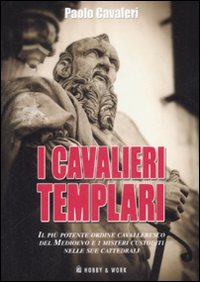 Most important order of chivalry of the Middle Ages and the mysteries held in its cathedrals
Knights  Most important order of chivalry of the Middle Ages and the mysteries held in its cathedrals
 Paul Hobby & Work Publishing ed., 2009 - 238 pp.
no doubt that the Templars were monastic order of chivalry that has most affected the history and culture of the Middle Ages. Inexhaustible source of myths and legends (especially because of his tragic suppression), the Templar Order has written memorable pages of courage and spirituality at the four corners of Europe and the Mediterranean basin. Next to their role as Defensores Fidei, the Templars have left countless multicultural knowledge with which they were impregnated (Christian philosophy, Islamic mysticism, Hermeticism Hebrew), as well as the mystery of the substrate to which they frequently were inspired. Quite a few of these testimonies have been set in stone: churches, cathedrals and abbeys of the Order still hold a myriad of secrets decipherable only by those who, armed with a strong interdisciplinary background, you can forward this maze without getting lost esotericism of begging. In this essay Paul Cavaleri leads us to hand on the architecture of the temple and its mysteries. From Spain to Scotland, from Italy to Palestine, Cavaleri examines the religious buildings of the Order of the Temple to reveal its most unpredictable, in a spectacular journey of discovery that reveals itself as beautiful and compelling and more than a novel.


0 comments:
Post a Comment